
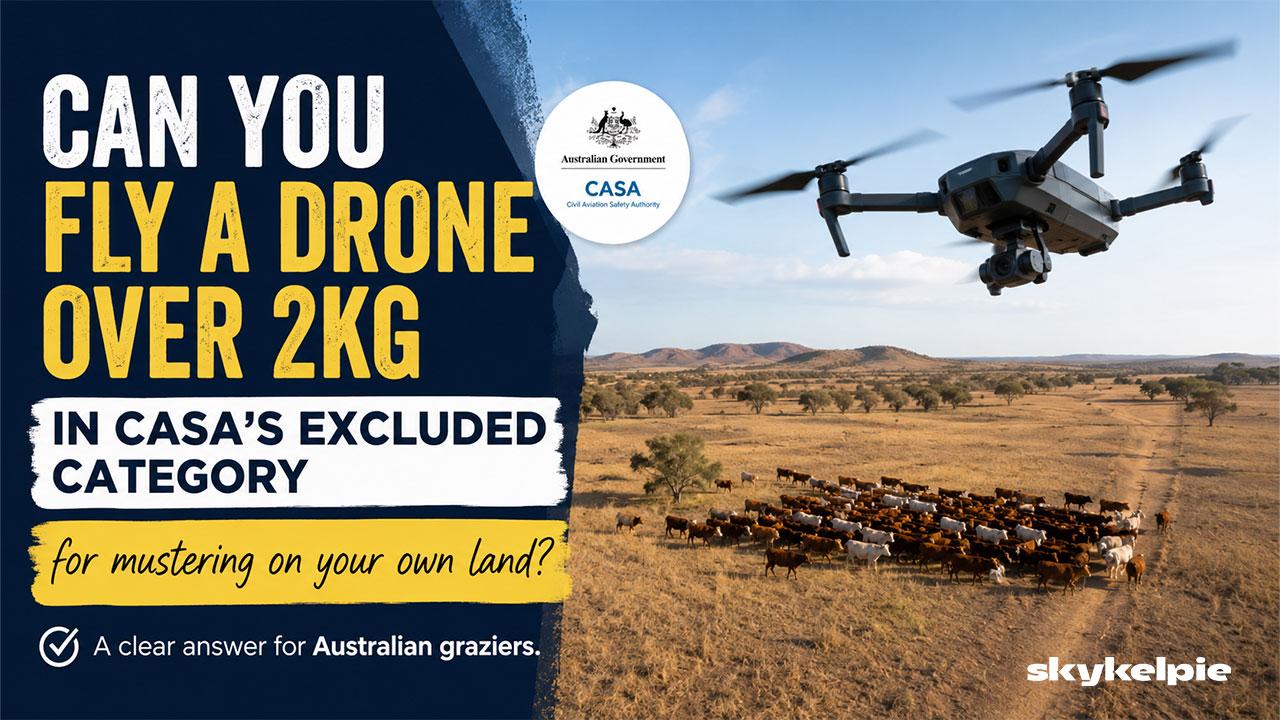
In short: yes — under CASA’s excluded category, a landholder can generally operate a drone heavier than 2 kg (and up to 25 kg) over their own land for tasks connected to their primary-production business, including mustering, provided they stay within the standard operating conditions. The heavier weight comes with a stronger emphasis on safe operation, but it does not, by itself, force you into holding a remote pilot licence. Always confirm the current rules at casa.gov.au.
This article focuses on the weight question — drones over 2 kg. For the full landholder rules and how the excluded category works generally, see our guide: CASA Landholder Rule: fly drones on your farm without a licence.
What “excluded category” means
The excluded category covers lower-risk drone operations that don’t require the full commercial licensing framework. For graziers, the most relevant part is flying over land that you own or control as part of your own primary-production business — including land you lease, agist or otherwise manage. It can also apply to employees carrying out drone operations on behalf of the landholder or business controlling the property.
Under 2kg vs 2–25kg, at a glance
Situation | Under 2 kg | Over 2 kg, up to 25 kg (own land) |
|---|---|---|
Remote pilot licence (RePL) required? | Generally no, within conditions | Generally no on your own land, within conditions |
Standard operating conditions apply | Yes | Yes |
Flying for someone else | Needs licensing and other accreditation | Needs licensing and other accreditation |
Use this as orientation only and confirm specifics for your aircraft on casa.gov.au.
The standard operating conditions (the bit that matters)
Visual line of sight, daylight, below the standard height limit of 120 metres AGL;
Well clear of people, other aircraft and aerodromes;
Not over populous areas;
For your own business — not paid work for others.
What it means for real mustering
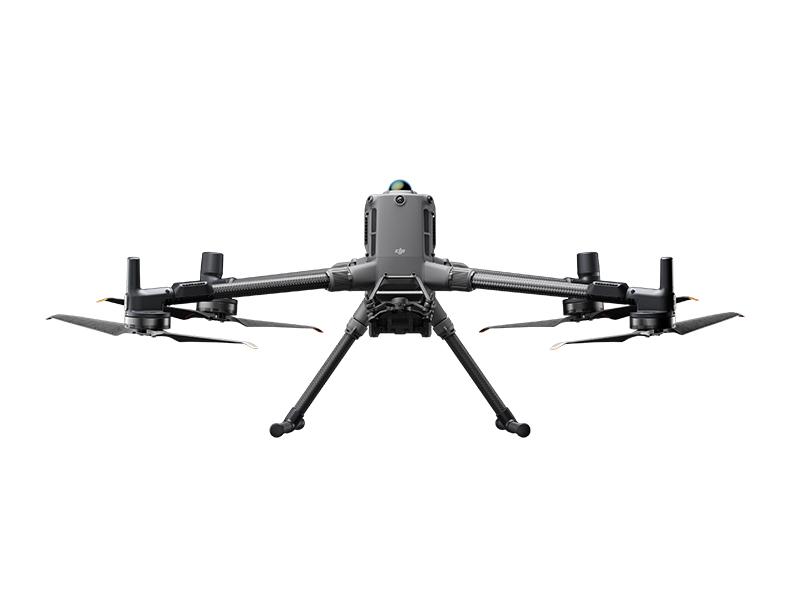
Most enterprise mustering drones sit in the 2–25 kg band. On your own country, within line of sight, that’s typically fine under the excluded category — which is why drones have taken off for paddock work. The bigger, more capable aircraft give you range and better cameras for spotting stock; the responsibility is flying them safely and within the conditions.
This article is general information, not legal advice. Rules change — confirm current CASA requirements at casa.gov.au before flying. Information published 24 May 2026.
Want to fly it properly? The SkyKelpie Aerial Stockmanship Course teaches safe, effective drone mustering — setup, low-stress stock movement, paddock strategy and yard work.
Featured in this guide
Was this article helpful?
Your feedback helps us improve our documentation