
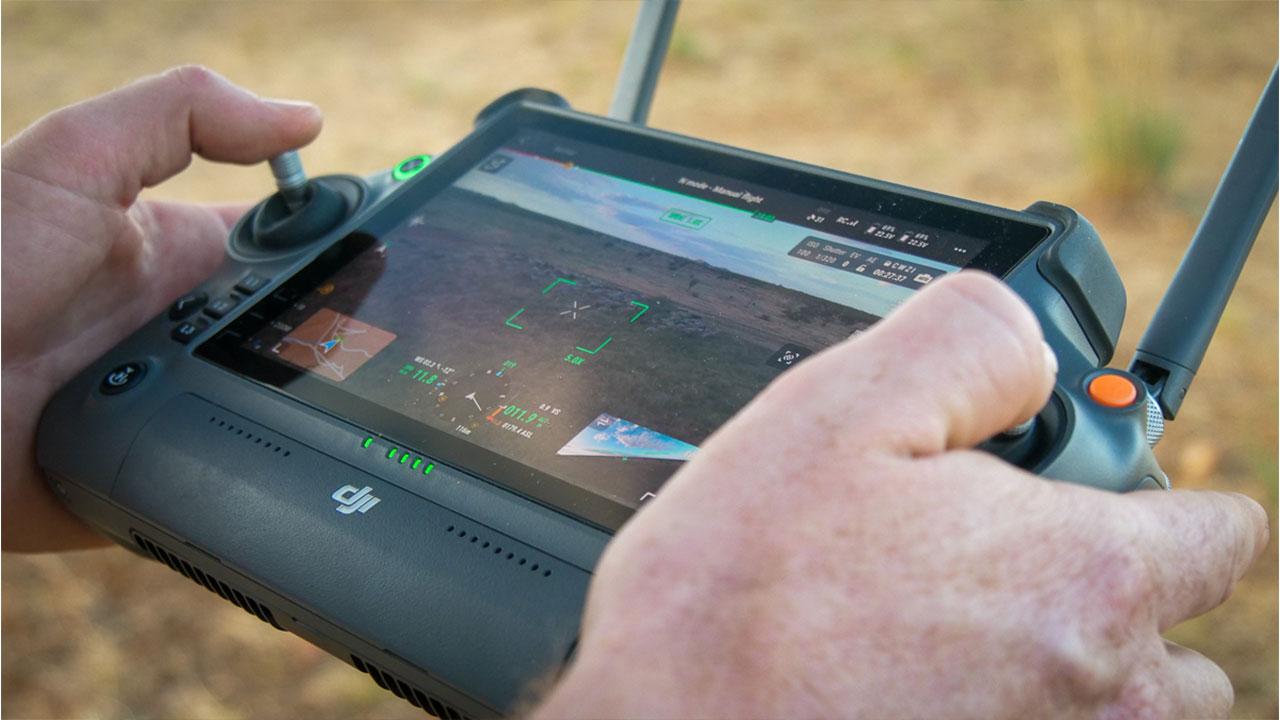
Done well, a drone moves cattle calmly and saves you hours. Done badly, it scatters them and adds stress. The difference is technique. Here’s a beginner’s walkthrough of a paddock muster — the same low-stress principles taught in full in our course.
1. Set up before you fly
Charge batteries, update the aircraft, check the camera and confirm your return-to-home point. Know your paddock: where the mob is, where the gate or yards are, and the line you want them to walk.
2. Read the paddock and plan the muster
Work out your destination and the natural route stock will take. Usually start at the back of the paddock (in relation to where you want the stock to go). Note hazards — timber, gullies, fences, water.
3. Approach the mob calmly
What we call “working a T” involves moving the drone in a slow side-to-side motion while gradually closing the distance to the animals. This lateral movement creates a natural pressure-and-release effect: as the drone moves toward the centre of the “T” — the point closest to the animal — pressure is applied, and as it moves back out to the side, that pressure is released. It also helps because cattle do not have the same depth perception as humans, so the lateral movement makes it easier for them to clearly identify what is applying the pressure. This encourages calmer, more controlled movement rather than forcing or chasing the stock.
4. Moving Livestock Towards a Central Destination
The next step is continuing to locate and guide livestock towards a central destination, often a watering point. In many situations this is the most natural approach, as livestock are herd and sanctuary-driven animals that are generally drawn toward familiar areas of comfort, safety and water. Rather than forcing movement, good stockmanship works with these natural behaviours.
5. Moving Livestock Towards the Yards
From there, the livestock are typically moved towards a processing facility — what we commonly call the yards in Australia. By this stage, the drone has often already done much of the heavy lifting in the muster. In many operations, ground staff on motorbikes, horses or buggies will then take over the closer handling work. However, it is now a well-established practice for drones to either perform or assist with this stage of the operation.
Every muster is different, and drones can be used in a range of ways depending on the terrain, livestock behaviour and overall strategy. For example, a drone may assist by monitoring the wing of a mob to help keep animals together across rough country, particularly when mobs stretch out over large distances. In other situations, the drone may be more effective working the tail of the mob to support ground staff, or operating near the lead animals to help maintain a steady, controlled pace of movement. It is now well documented that drones are capable of calmly influencing the lead of a mob and helping maintain forward movement without excessive pressure.
The aerial perspective also provides valuable real-time surveillance of livestock behaviour and movement, which can then be communicated to ground staff to improve coordination and reduce stress on the animals.
6. Returning and Settling Livestock
After processing, drones can also play a valuable role in taking livestock back to their paddock or helping settle and hold them on a watering point. This final stage is important. The goal of good aerial stockmanship is not simply to move livestock, but to leave them in a calm and settled state.
As we often say: we always leave the livestock — they do not leave us.
Important Considerations
All livestock species, breeds and education levels are different. Their behaviour can also be influenced by genetics, previous handling experiences and environmental conditions. Operational procedures should always be adapted to suit the specific livestock, terrain, weather conditions and management objectives of the individual operation.
This is the introduction. The complete, filmed methodology — including sheep and goats, advanced flying, mapping and yard work — is in the course.
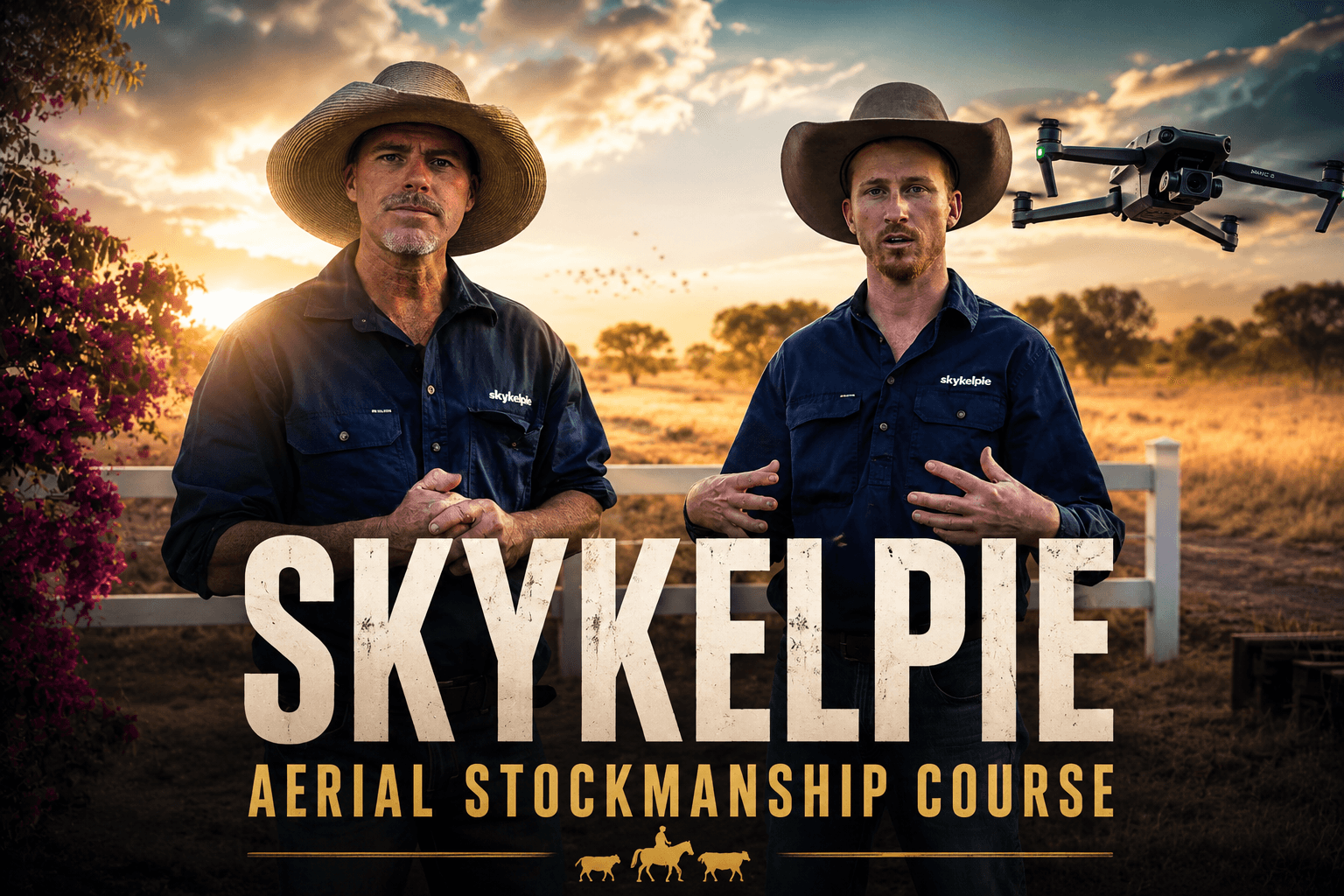
Go deeper: the SkyKelpie Aerial Stockmanship Course shows it all on real properties, at your own pace.
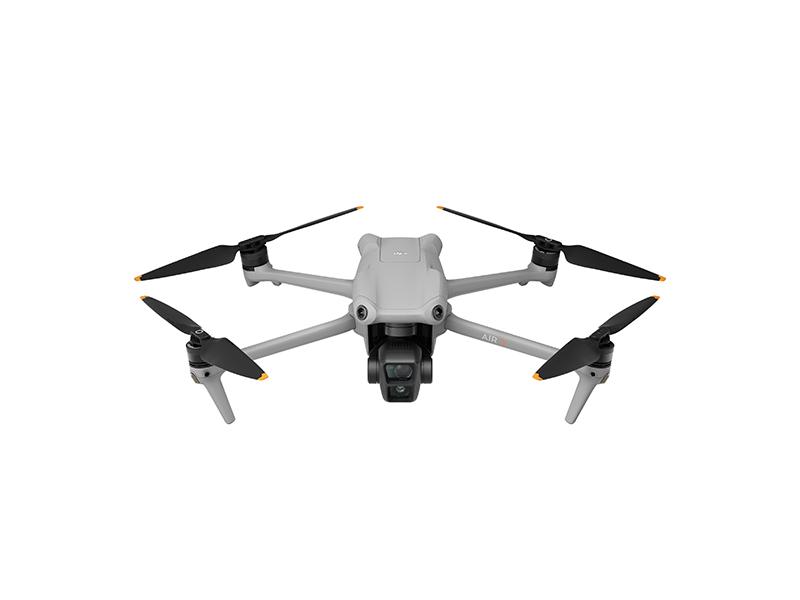
Featured in this guide
Was this article helpful?
Your feedback helps us improve our documentation