
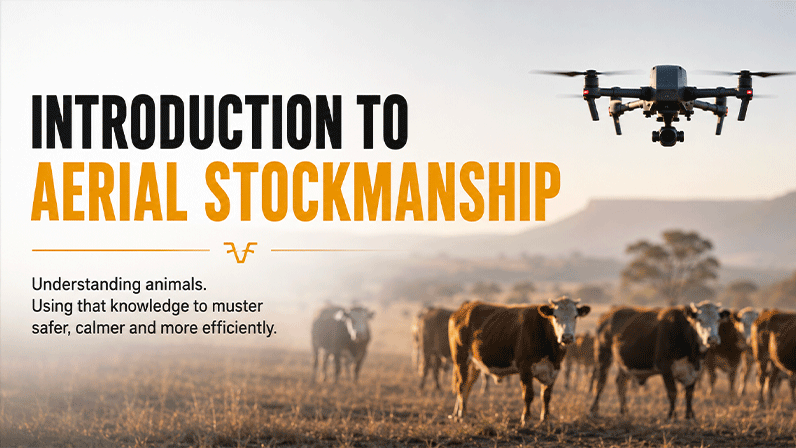
Drones have quietly transformed the way Australian producers muster livestock. But a drone in the sky is only half the story. The real game-changer is what happens when the operator behind the controls understands animals as deeply as they understand the technology.
Aerial stockmanship isn't about flying faster or pushing harder. It's about understanding why animals move — and using that knowledge to make every muster safer, calmer, and more efficient than the last.
"With a drone, you're never going to outfly the animals — drones don't have teeth. You need to work with the animals, build high herding instincts, and use enabling infrastructure." — SkyKelpie |
It Starts With Animal Psychology
At the heart of aerial stockmanship is a simple but powerful idea: animals exist in one of two mental states, and everything — their responsiveness, their welfare, their weight gain — depends on which state they're in.
When an animal is calm and cooperative, it's eating properly, its immune system is functioning, and it responds willingly to gentle pressure. Push it into defence mode, and you get a completely different animal: adrenaline-driven, unpredictable, hard to move and harder to settle.
The goal of every drone muster isn't just to get cattle from Point A to Point B. It's to do it in a way that keeps animals in that cooperative state — so they arrive calmer, settle faster, and are easier to handle next time.
Positioning Is Everything
The most common mistake new aerial operators make is pressuring animals from directly behind. It seems logical — push from the back, they move forward. But applied incorrectly, rear pressure triggers exactly the wrong response: animals that turn, split, or face up to the aircraft.
Effective aerial stockmanship uses the animal's natural flight zone and point of balance to create movement that feels like the animal's own choice. The drone doesn't chase. It guides.
Knowing precisely where to position — at what angle, at what distance, and for how long — is a skill that takes time to develop. It's also the difference between a mob that moves willingly and one that takes twice as long and arrives twice as stressed.
The best aerial stockpeople are students of animal behaviour first, and drone pilots second. |
Every Muster Shapes the Next One
This is the principle that separates average operators from exceptional ones: every handling event is an investment in future musters.
Animals remember. A mob that has been over-pressured, rushed through yards, or handled poorly becomes progressively harder to manage. A mob that has been handled correctly — calmly started, given time to settle, allowed to mother up before driving — becomes easier.
The five phases of a livestock movement event (starting animals, mob formation, driving, yard handling, and settling) each play a role in shaping animal mentality. Understanding what each phase is actually doing to the animal's psychology is what allows an operator to make the right call in the moment.
The Skills You Don't Know You're Missing
Most drone operators working with livestock have figured out the basics through trial and error. They can move a mob. They can yard up. They get results.
But there's a significant gap between moving animals and moving them well. Between getting them there and getting them there calm. Between a muster that works today and a management approach that makes every muster better than the one before.
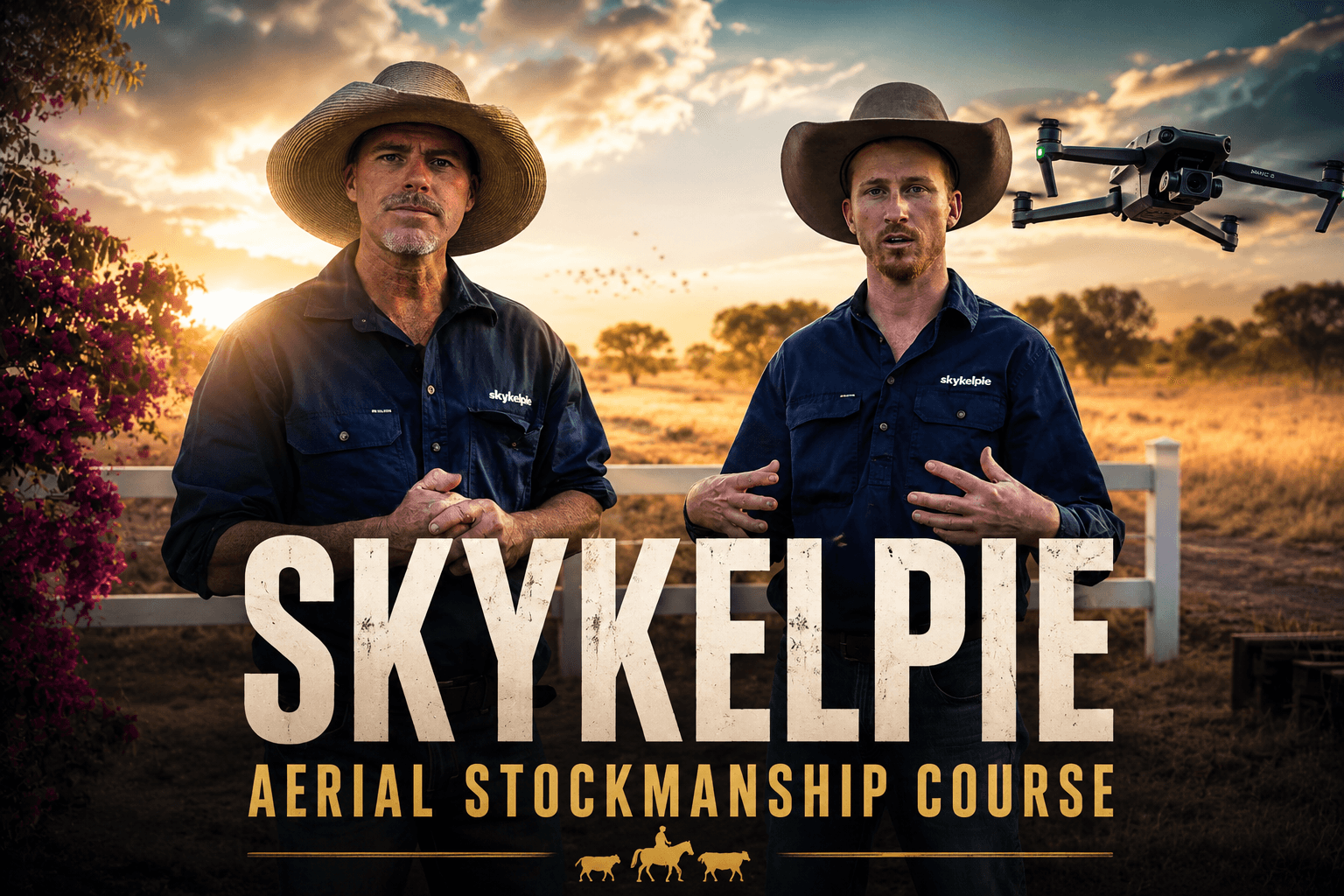
The SkyKelpie Aerial Stockmanship Masterclass is built for operators who want to close that gap. It covers the full picture: from the science of animal psychology and flight zones, to practical techniques for pressure and release, mob formation, yard work, and the judgement calls that separate a professional aerial stockperson from someone who is simply flying a drone near cattle.
Ready to develop real precision in the air? Enrol in the SkyKelpie Aerial Stockmanship Masterclass at skykelpie.com/course
Featured in this guide
Was this article helpful?
Your feedback helps us improve our documentation