
Thermal Drones for Livestock — What You Need to Know
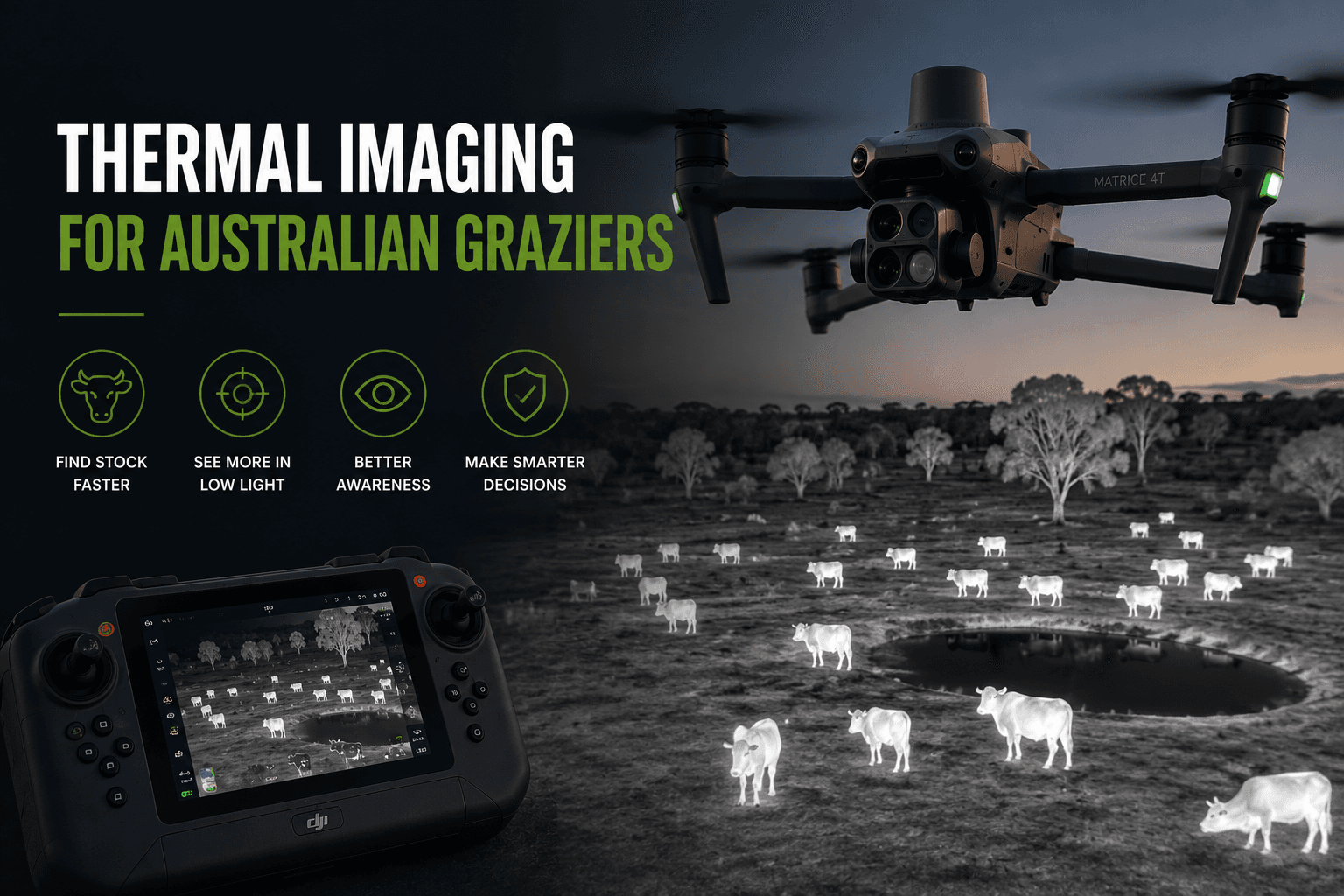
If you have ever spent half a day on horseback searching for a mob of cattle in thick brigalow scrub, you already understand the problem thermal drones solve. Livestock are warm-blooded. Vegetation is not. A thermal camera mounted on a drone can spot that temperature difference from hundreds of metres in the air, turning a needle-in-a-haystack exercise into a straightforward scan.
Thermal imaging is no longer a military or mining luxury. Enterprise-grade thermal drones are now within reach of working farms and stations across Australia, and the impact on mustering efficiency, animal welfare and feral pest management is genuine.
Why Thermal Matters for Livestock Operations
Finding Stock in Thick Scrub and Vegetation
This is the number-one use case for graziers. A standard visible-light camera — no matter how good — cannot see through a canopy of mulga, ironbark or lantana. A thermal sensor does not need to. It detects the heat signature of the animal, which stands out clearly against cooler vegetation. Even a single beast tucked under a tree shows up as a bright spot on the thermal feed.
Early Morning Mustering (Before Dawn)
The best time to muster is often the coolest part of the day — before dawn, when cattle are calm and the temperature differential between animals and ground is at its greatest. Thermal drones let you locate and begin pushing stock while it is still dark, so the mob is moving before the heat of the day sets in. This is a significant animal welfare advantage in northern Australia, where heat stress during mustering is a genuine concern.
Feral Animal Management
Pigs, dogs, foxes and cats are devastating to livestock operations and native wildlife across Australia. Thermal drones are exceptionally effective for locating feral animals, particularly at dawn and dusk when they are most active. Coordinating ground teams with a thermal-equipped drone overhead transforms feral control from guesswork into precision management.
Stock Counting and Auditing
Counting livestock across large paddocks is tedious and easy to get wrong from the ground. A thermal drone flying a systematic grid can scan the paddock from above, using heat signatures to make livestock stand out clearly against the landscape. This stronger contrast can then support object detection and make automated or semi-automated counting more practical than relying on visible-light imagery alone, where livestock can easily blend into dry grass, scrub or shadows.
Which DJI Drones Have Thermal?
Not every drone in the DJI enterprise range includes a thermal sensor. Here is what is available through SkyKelpie:
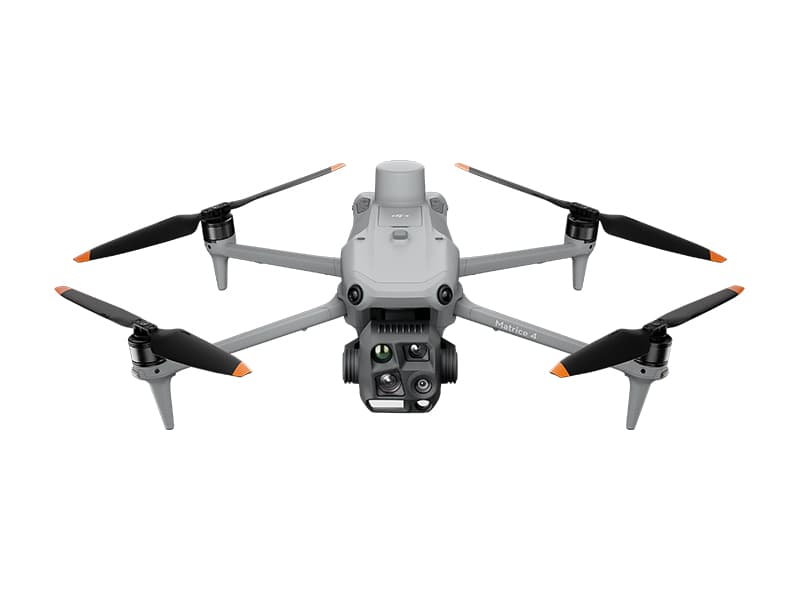
DJI Matrice 4T — Built-In Thermal
The Matrice 4T is the most accessible thermal enterprise drone in the DJI lineup. It has a built-in 640×512 radiometric thermal sensor alongside wide-angle and zoom visible cameras. The thermal sensor supports point, line and area temperature measurement, and the split-screen view lets you see thermal and visible feeds simultaneously. For most Australian graziers, the M4T is the thermal drone to buy — it is compact, foldable, fast to deploy and does not require separate payload management.
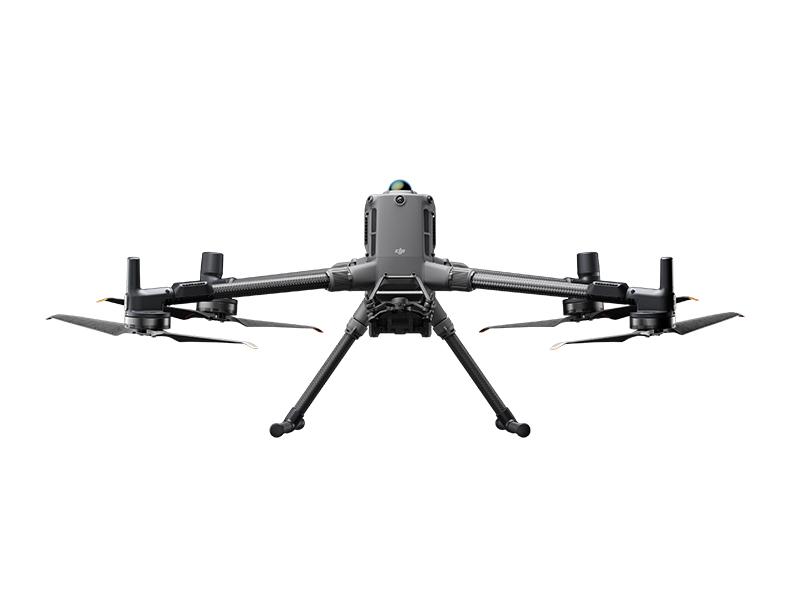
DJI Matrice 400 with H30T or Zenmuse Payloads
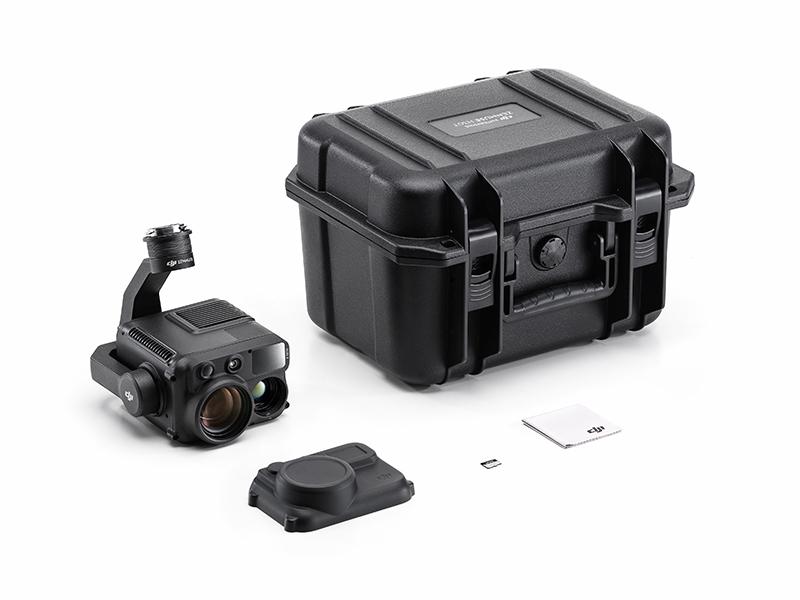
The Matrice 400 is DJI’s flagship enterprise platform and supports interchangeable payloads. The H30T gimbal combines a 640×512 thermal camera, a wide-angle visible camera, a zoom camera (up to 400× hybrid) and a laser range finder. The thermal resolution is slightly better than the M4T, but the zoom capability and the M400’s larger airframe (better stability in wind, longer endurance with heavy payloads) make it the choice for large-scale pastoral operations and commercial pest-management contracts.
Resolution Differences
The Matrice 4T features a 640×512 thermal sensor, which is already highly effective for identifying livestock at typical survey altitudes of roughly 30–80 metres AGL. The Zenmuse H30T, however, steps up to a significantly higher native 1280×1024 thermal resolution, providing more detail and improved long-range target identification. Beyond thermal performance, the platforms also differ in zoom capability, payload flexibility, endurance and overall airframe robustness.
Practical Tips for Thermal Flying
Fly early or late. Thermal contrast is best when the ambient temperature is lowest — pre-dawn and post-sunset are ideal. Midday in summer, when the ground is scorching, reduces contrast and makes it harder to pick out animals.
Altitude matters. Lower is better for thermal detail, but higher gives you a wider field of view. For mustering, 40–60 metres AGL is a good starting point. For broad-area scanning, 80–100 metres lets you cover ground faster.
Adjust the palette. Most thermal cameras offer multiple colour palettes (white-hot, black-hot, ironbow, etc.). White-hot is generally the most intuitive for spotting livestock — animals appear as bright white shapes against a darker background.
Mind the wind. Strong wind cools exposed surfaces unevenly and can reduce thermal contrast. Calm mornings produce the cleanest thermal images.
Use split-screen. The M4T and H30T both support simultaneous thermal and visible feeds. Use split-screen to confirm what the thermal sensor is showing you — it helps distinguish livestock from other heat sources (rocks, machinery, water troughs that have been in the sun).
Record the thermal feed. Thermal video and still captures are invaluable for stock counting, welfare records and demonstrating the value of drone operations to property managers and insurers.
Getting Started with Thermal
If you are already using a non-thermal drone for farm work and want to add thermal capability, the DJI Matrice 4T is the natural upgrade. If you are starting from scratch and know thermal is a priority, it makes sense to go straight to the M4T rather than buying a visible-only drone first.
For large commercial operations — contract mustering, broadscale feral management, or stations running multiple drone platforms — the Matrice 400 with H30T offers the modularity and endurance to justify the higher investment.
Talk to the SkyKelpie team about which thermal platform suits your property, or view our thermal-capable drones in the online store. We can walk you through a live thermal demonstration if you are in south-east Queensland or arrange a remote session.
Featured in this guide
Was this article helpful?
Your feedback helps us improve our documentation